Last updated: October 12, 2026
In modern mechanical engineering and precision manufacturing, the Simufact Forming Simufact Welding simulation portfolio developed by Hexagon Manufacturing Intelligence stands as the benchmark for virtual process engineering. Built specifically for tooling designers, forging specialists, and structural welding engineers, the unified ecosystem of Simufact Forming Simufact Welding provides end-to-end digital capabilities spanning from raw billet forming to finished welded assemblies. Implementing these solutions enables manufacturers to accurately predict physical phenomena such as thermal shrinkage, residual stresses, distortion, and microstructural phase evolutions long before cutting physical metal on the shop floor.
Advanced manufacturing facilities worldwide increasingly rely on comprehensive virtual prototyping to eliminate costly physical trials. The integration of metal forming and welding simulation ensures that engineering teams can foresee potential production bottlenecks early in the product development lifecycle. By adopting the combined workflow of Simufact Forming Simufact Welding, companies bridge the traditional gap between component manufacturing and structural assembly, achieving unprecedented levels of dimensional accuracy and mechanical reliability.
What Is Simufact Forming Simufact Welding? Applications in Metal Deformation and Joining
Simufact Forming is a dedicated non-linear finite element analysis (FEA) software designed for the entire spectrum of bulk metal forming and sheet metal processing. Unlike general-purpose FEA tools that require tedious manual meshing and computationally expensive remeshing setups, Simufact Forming features an automated, intelligent meshing engine optimized for severe geometric and material non-linearities. When combined with joining simulation, Simufact Forming Simufact Welding delivers a complete digital thread for heavy industries.
Core Technological Modules of Simufact Forming
- Hot, Warm, and Cold Forging: Accurately tracks metal material flow within die cavities, identifies potential underfilling, folding/laps, and micro-cracking, and calculates press tonnage to ensure proper press machinery selection.
- Profile and Thread Rolling: Simulates continuous rolling of structural profiles, railroad rails, rebar, and high-strength fasteners with high mechanical fidelity.
- Metal Extrusion: Evaluates direct and indirect extrusion of complex aluminum profiles and steel alloys, ensuring balanced flow velocity across dies while preventing profile distortion.
- Sheet Metal Forming: Analyzes deep drawing, trimming, and flanging while assessing springback behavior based on the Forming Limit Diagram (FLD).
- Heat Treatment and Phase Transformation: Models quenching, tempering, and annealing stages to predict microstructural phase distributions (Austenite, Martensite, Bainite, Ferrite, Pearlite) along with Rockwell and Vickers hardness values.
Furthermore, metal deformation processes dictate the initial metallurgical and mechanical state of every manufactured part. Understanding these foundational behaviors through the lens of Simufact Forming Simufact Welding allows metallurgists and process engineers to fine-tune thermal boundaries, friction coefficients, and mechanical loads before committing capital to physical tooling.
Die Life Assessment and Fatigue Analysis
Tooling and die development constitutes a major cost factor in forging and stamping operations. Simufact Forming enables engineers to model pre-stressed die assemblies and evaluate elastoplastic die loading. By assessing contact stress concentrations, abrasive wear using the Archard wear model, and thermal fatigue cycles, tooling engineers can optimize fillet radii, select premium die materials, and increase tooling life by 30% to 50%.
Extended die life directly correlates with lower production costs and reduced downtime on high-capacity mechanical and hydraulic presses. Integrating die stress calculations into the broader Simufact Forming Simufact Welding strategy ensures that tooling investments are fully optimized against extreme mechanical and thermal cycling.
What Is Simufact Welding? Role in Structural Welding and Joining
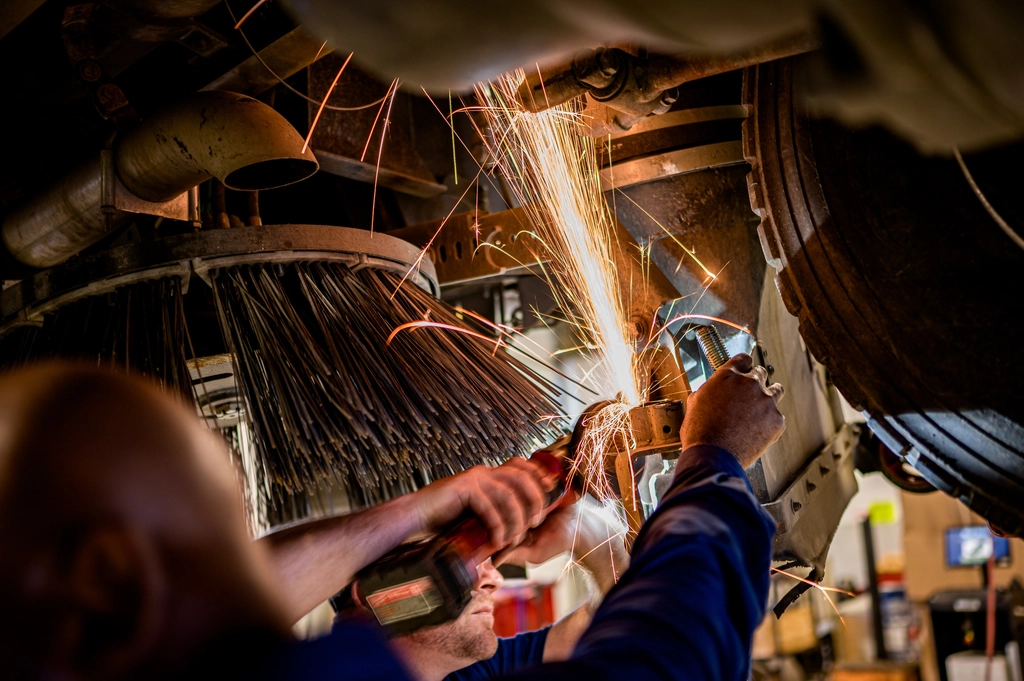
Simufact Welding is a specialized numerical simulation solution dedicated to modeling fusion and pressure welding operations across complex metallic assemblies. In conventional manufacturing, thermal expansion, rapid contraction, and localized plastic strains generate high residual stresses and dimensional distortions, leading to fit-up rejections and structural failure under operational loads. Within the context of Simufact Forming Simufact Welding, this module addresses the critical post-forming joining stages.
Supported Welding and Joining Technologies
- Arc Welding (GMAW/MIG/MAG, GTAW/TIG, SAW): Employs the Goldak double-ellipsoid moving heat source model to represent transient heat input and melt pool dynamics while predicting the Heat-Affected Zone (HAZ).
- High-Energy Beam Welding (Laser and Electron Beam): Accurately simulates keyhole formation with concentrated energy densities, predicting narrow thermal shrinkage and joint integrity.
- Resistance Spot Welding (RSW): Couples electro-thermo-mechanical physics to resolve weld nugget growth and sheet indentation under electrode clamping forces.
- Friction Stir Welding (FSW): Evaluates solid-state thermo-mechanical material flow without bulk melting, providing indispensable insights for aluminum automotive and aerospace structures.
Each joining technology introduces unique thermal cycles and mechanical constraints. By leveraging Simufact Forming Simufact Welding capabilities, engineers can analyze microstructural variations within the weld metal and the adjacent heat-affected zone, ensuring structural compliance with stringent industry standards such as AWS, ASME, and ISO.
Optimizing Welding Sequences and Clamping Strategies
A primary capability of Simufact Welding is the virtual evaluation of clamping strategies and welding sequences. Rather than relying on excessively rigid fixtures that induce high locked-in residual stresses, engineers can test alternate clamping pressures, sequential unclamping routines, and balanced stitch-welding paths. This ensures the final assembly meets geometric tolerances without requiring post-weld flame or hydraulic straightening.
Optimizing these parameters through the Simufact Forming Simufact Welding workflow reduces trial-and-error shop floor adjustments, preserves material integrity, and significantly shortens assembly lead times for large-scale fabrications.
Comparing Simufact Forming and Simufact Welding in Manufacturing Engineering
To establish where each module fits within the production chain, the following comparison highlights the scope and complementary nature of the Simufact Forming Simufact Welding platform:
| Technical Criteria | Simufact Forming | Simufact Welding |
|---|---|---|
| Simulation Focus | Bulk and sheet metal deformation, large plastic strain, material flow | Joining thermodynamics, weld pool metallurgy, thermal distortion |
| Primary Load Source | Mechanical press forces, frictional contact, hydrostatic pressure | Localized welding heat inputs, rapid thermal heating and cooling cycles |
| Metallurgical Analysis | Dynamic recrystallization, grain growth, quenching phase shifts | HAZ phase constituents, weld nugget hardness, residual thermal stresses |
| Target Workpiece | Single components (forged billets, stamped sheets, extruded bars) | Fabricated assemblies comprising multiple sheet, tube, or solid parts |
| Primary Engineering Output | Final forged/formed geometry, press loads, die wear life | Full-field distortion maps, optimal weld sequence, clamping reaction forces |
As detailed above, while forming simulation focuses on massive plastic deformation and material displacement, welding simulation centers on transient thermal transfer and phase transformation. Together, the components of Simufact Forming Simufact Welding provide an unbroken simulation chain that addresses every phase of heavy component creation.
Integrated Simufact Forming and Welding Workflows in Continuous Manufacturing
The true value of Simufact Forming Simufact Welding lies in continuous manufacturing history data exchange. In real-world production, welded structural components are rarely made from pristine, stress-free base metals; they almost always undergo prior bending, drawing, or forging operations.
Transferring Residual Stresses and Strain Hardening Data
When a structural part is formed in Simufact Forming, the software tracks localized work hardening (equivalent plastic strain) and the full residual stress tensor. Through native data mapping, this accumulated physical state is seamlessly imported into Simufact Welding as an initial state. Consequently, simulation engineers avoid the inaccurate assumption of a zero-stress starting condition, bringing virtual distortion predictions into near-perfect alignment with physical CMM measurements.
This data continuity is a cornerstone of the Simufact Forming Simufact Welding philosophy, allowing advanced manufacturers to account for cumulative manufacturing histories across multi-factory production lines.
Industrial Applications of Simufact Forming and Welding
- Automotive Chassis and Subframes: Stamping high-strength crossmembers in Simufact Forming followed by automated robotic assembly in Simufact Welding ensures fastener holes align perfectly with vehicle bodies.
- Aerospace Propulsion: Simulating isothermal forging of nickel-base superalloys for blisks, followed by electron beam welding (EBW) or inertia friction welding to form rotor assemblies.
- Pressure Vessels and Heavy Energy Equipment: Modeling heavy plate bending followed by longitudinal and circumferential seam welding to mitigate HAZ cracking under operating pressures.
Adopting Simufact Forming Simufact Welding methodologies empowers industries operating in high-risk sectors to achieve flawless execution on complex, multi-stage fabrications where failure is not an option.
Economic and Technical Benefits of Implementing Simufact
Adopting the Simufact Forming Simufact Welding software suite provides an immediate return on investment (ROI) by systematically replacing trial-and-error physical prototypes with virtual engineering:
- Over 70% Reduction in Physical Die Iterations: Die underfilling, folding, and press overloading are identified virtually, preventing catastrophic tooling damage.
- Elimination of Post-Weld Rework: Optimized welding sequences and predictive shrinkage compensation produce assemblies that meet dimensional tolerance criteria on the first production run.
- Accelerated Lightweighting: Engineers can aggressively down-gauge sheet metals and incorporate Advanced High-Strength Steels (AHSS) without unexpected tearing or excessive springback.
- Faster Time-to-Market: Shortens the engineering cycle from concept drawing to mass manufacturing, giving Tier suppliers an edge during OEM bidding cycles.
By leveraging the predictive power of Simufact Forming Simufact Welding, engineering enterprises transform traditional manufacturing guesswork into a predictable, highly optimized science.
Solid & Soft: Authorized Simufact Consulting and Software Partner in Vietnam
Solid & Soft is a trusted distributor, technical consultant, and software provider specializing in advanced manufacturing simulation across Vietnam. For the Simufact Forming Simufact Welding portfolio, our application engineers assist industrial clients with modular licensing selection, turnkey process deployment, and advanced training programs for design and production teams.
Alongside mechanical process simulation, companies developing complex electro-mechanical devices and advanced semiconductors can rely on Solid & Soft for industry-leading EDA solutions. Explore our comprehensive technical guide on what Cadence software is, review our comparison between Cadence Allegro vs Altium Designer, or check genuine Cadence software pricing to optimize your multidisciplinary R&D pipeline.
With a commitment to long-term client success, Solid & Soft provides dedicated support to solve complex technical bottlenecks, enabling factories and engineering centers in Vietnam to master advanced digital manufacturing workflows through solutions like Simufact Forming Simufact Welding.
References
- Cadence multiphysics system analysis
- Cadence products
- Cadence PCB design and analysis
- Cadence digital design and signoff