Last updated: 11/09/2026
Cradle CFD is an advanced Computational Fluid Dynamics (CFD) simulation suite developed by Cadence, featuring two core solvers: scSTREAM and scFLOW. Renowned for its extraordinary automated meshing speed, ability to process complex CAD geometries without tedious cleanup, and robust algorithmic stability, Cradle CFD empowers CAE engineers to resolve non-linear flow and complex thermal management challenges that often cause conventional CFD tools to crash or fail to converge.
What is Cradle CFD? An Overview of the Fluid Dynamics Simulation Suite
Cradle CFD is a comprehensive suite of thermal and fluid dynamics simulation tools designed to support everything from initial conceptual design to detailed product analysis. By leveraging state-of-the-art mesh generation algorithms and an intuitive user interface, this platform dramatically reduces pre-processing time—traditionally one of the most time-consuming bottlenecks in the CAE engineering workflow.
As modern product development cycles demand shorter design phases alongside higher thermo-aerodynamic precision, understanding the fundamentals of computational fluid dynamics on Wikipedia serves as a key foundation for R&D teams striving to optimize products virtually. Cradle CFD meets these exact requirements by delivering tightly coupled multiphysics and thermal-structural co-simulation capabilities.
Two Core Pillars: scSTREAM and scFLOW in Cradle CFD
The unique strength of the Cradle CFD ecosystem lies in its clear division between two specialized solvers: scSTREAM for structured/Cartesian grids and scFLOW for complex curved surfaces.
1. scSTREAM: Ultra-Fast Structured Cartesian Meshing for Electronics and Architecture
scSTREAM is a Cartesian grid-based CFD solver (Structured Cartesian Mesh) specifically optimized for thermal analysis in printed circuit boards (PCBs), electrical enclosures, data centers, and building ventilation (HVAC) systems. Thanks to its structured grid approach, scSTREAM delivers distinct advantages:
- Record-Breaking Meshing Speed: Capable of generating tens of millions of mesh elements in just seconds without requiring engineers to perform extensive geometry cleanup.
- Memory Efficiency: The Cartesian mesh structure optimizes computer RAM usage, enabling the computation of massive models on mid-range workstations.
- Smart Parts Integration: Allows rapid insertion of standard industrial components—such as axial/centrifugal fans, heatsinks, and semiconductor chip modules—pre-loaded with calibrated thermo-fluid properties.
2. scFLOW: Polyhedral Mesh for Complex Flow Geometries
In contrast to scSTREAM, scFLOW is a next-generation CFD tool utilizing unstructured polyhedral meshing (Unstructured Polyhedral Mesh). It stands as the premier choice for engineers analyzing automotive aerodynamics, industrial pumps, flow control valves, and turbomachinery with intricate curved geometries.
- Polyhedral Mesh Topology: Each polyhedral element shares faces with multiple adjacent neighbors, significantly improving flow gradient accuracy and accelerating convergence compared to traditional tetrahedral meshes.
- Overset Mesh Technology: Enables seamless simulation of complex moving bodies (such as opening/closing valves, rotating impellers, or moving wheels) without requiring full global remeshing at every time step.
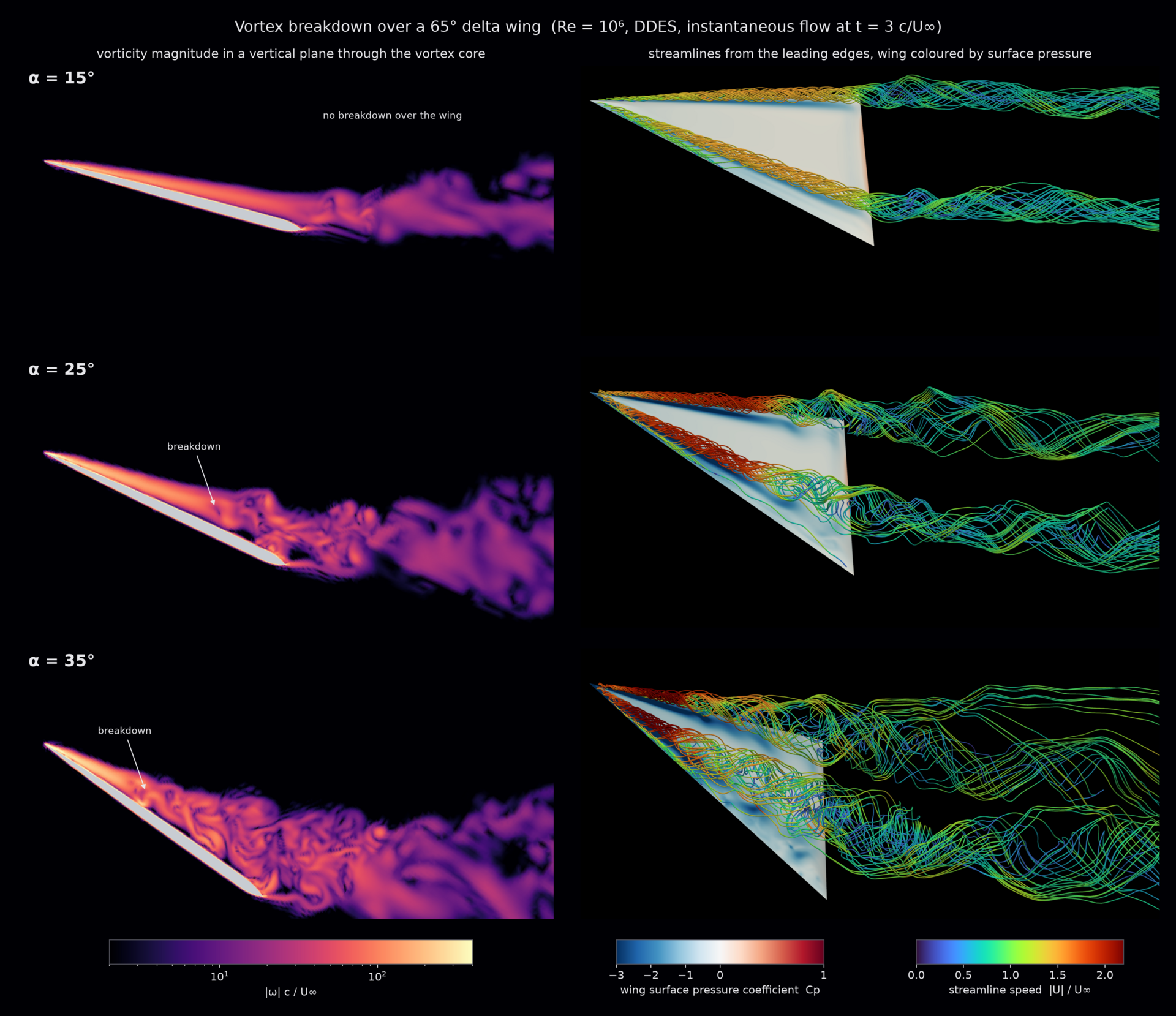
- Multiphase and Turbulence Modeling: Supports advanced multiphase models (VOF – Volume of Fluid), cavitation phenomena, and high-fidelity turbulence modeling (RANS, LES, DES) aligned with official technical specifications on the Cadence official CFD product page.
Thoroughly Resolving Divergence Errors in Traditional CFD Simulations
A major pain point for CAE engineers using standard commercial CFD software is the occurrence of divergence errors or slow convergence rates. These issues typically arise when models exhibit strong non-linear flow regimes, extreme temperature gradients, or highly distorted boundary layer meshes.
Cradle CFD tackles these difficulties through 3 key engineering mechanisms:
- Automated Cut-Cell Meshing: Accurately preserves physical boundary geometry without sacrificing element quality near contact surfaces.
- Robust Parallel Solver: Built with optimized parallel code logic ensuring smooth residual decay even for models exceeding hundreds of millions of elements.
- Advanced Radiation Heat Transfer Control: Integrates stable Monte Carlo and Discrete Ordinates (DO) radiation models, ensuring combined conduction-convection-radiation problems converge reliably without numerical oscillations.
Comparing scSTREAM vs. scFLOW: Choosing the Right Tool
To help CAE engineers and R&D managers select the ideal tool for their specific application, the comparison table below highlights the core technical criteria separating scSTREAM and scFLOW within the Cradle CFD ecosystem:
| Comparison Criteria | scSTREAM | scFLOW |
|---|---|---|
| Primary Mesh Type | Structured Cartesian Grid | Unstructured Polyhedral Grid |
| Geometry Cleanup Time | Near-zero (handles raw CAD effortlessly) | Moderate (requires smooth surface prep) |
| Best Suited Applications | PCB cooling, electrical cabinets, data centers, HVAC | Automotive aerodynamics, turbomachinery, flow valves |
| Geometric Motion | Fixed coordinates or simple motion | Complex moving bodies (Overset Mesh, Discontinuous) |
| Meshing Speed | Ultra-fast (Tens of millions of cells/min) | Fast with automated Boundary Layer optimization |
Real-World Applications of Cradle CFD Across Industries in Vietnam
In Vietnam’s evolving manufacturing and technology landscape, accelerating product R&D requires enterprises to master advanced simulation techniques to comply with strict international export standards. The powerful solutions within the Cradle CFD simulation ecosystem by Hexagon and Cadence deliver tangible value across multiple sectors:
- Electronics & Semiconductor Industry: Evaluating chip-level temperature distribution, thermal interface material (TIM) performance, and airflow delivery in smart home devices and mobile phones.
- Automotive & Electric Vehicles (EV): Analyzing thermal behavior in lithium-ion battery packs, predicting drag coefficients (Cd) of vehicle bodies, and optimizing underhood cooling and cabin HVAC comfort.
- General Manufacturing & Machinery: Simulating metal casting and mold filling, predicting pressure drops in pneumatic piping networks, hydraulic pumps, and industrial valves.
Optimizing Cradle CFD Licensing Costs with the MSCONE Model and Solid & Soft Support
Beyond technical capability, software license expenditure is always a top priority for R&D Managers and Engineering Directors. Cradle CFD offers flexible licensing models that help organizations optimize budgets using a Token-based system (MSCONE).
Under the MSCONE Token system, businesses gain access not only to scSTREAM and scFLOW but can also dynamically allocate tokens to run companion simulation software such as MSC Nastran (structural FEA), Adams (multibody dynamics), or Actran (acoustics) under a single investment pool.
As an authorized reseller of Cadence solutions in Vietnam, Solid & Soft is dedicated to empowering local engineering teams through:
- Tailored software deployment advice and cost-optimized licensing configurations.
- Direct technical support in Vietnamese with rapid turnaround times, removing time-zone barriers.
- Structured technology transfer and training programs ranging from foundational CFD to advanced multiphysics workflows.