Last updated: 11/02/2026
Cadence’s acquisition of Hexagon’s Design & Engineering business—including the entire MSC Software portfolio—marks a strategic milestone, ushering in a new era of comprehensive multiphysics simulation. The convergence of classic mechanical simulation suites like MSC Nastran, Cradle CFD, and Adams with leading computational design tools enables enterprises to radically optimize R&D workflows. In Vietnam, the Cadence MSC integration offers local businesses access to world-class technology backed by direct technical support from authorized resellers.
What Is the Cadence MSC Acquisition of MSC Software?
During this strategic transition, Cadence Design Systems officially completed its acquisition of the Design & Engineering software unit from Hexagon, which includes the legendary MSC Software brand. This Cadence MSC transaction is more than a simple asset purchase; it represents a bold strategic move to build the industry’s most expansive multiphysics engineering simulation platform. The strategic acquisition details were formally documented across global regulatory filings and announced on the Cadence official website.
MSC Software has long been regarded as the premier standard in finite element analysis (FEA) and multibody dynamics (MBD). Originally developed in collaboration with NASA during the Apollo space program to calculate structural stability, the core algorithms behind MSC Nastran established foundational methodologies for modern computational mechanics. Through this strategic merger, world-class solvers such as MSC Nastran, Marc, Adams, Cradle CFD, Actran, and Digimat officially join the Cadence software ecosystem. Engineering teams can also reference legacy product architecture archives maintained on the Hexagon MI product page to track technological heritage.
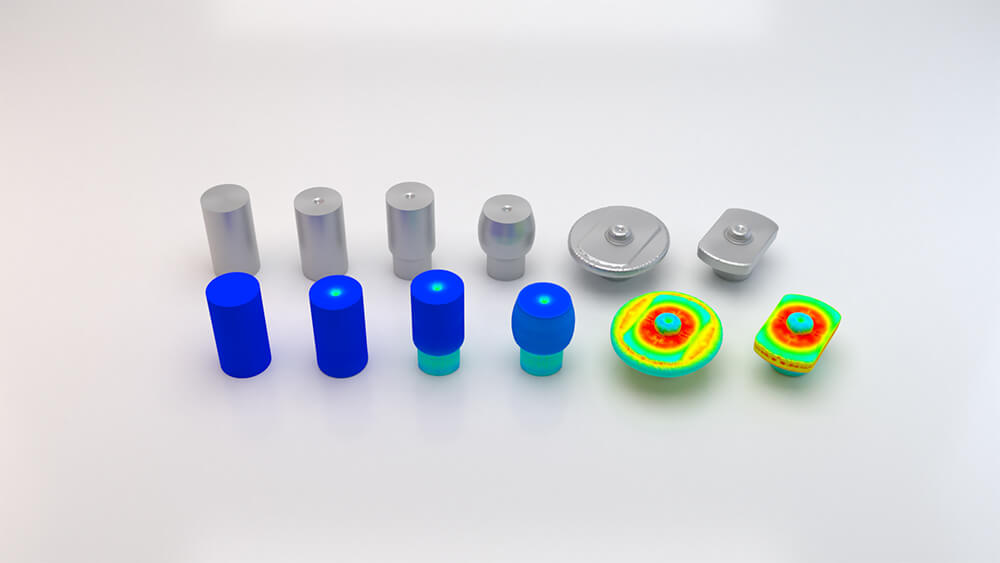
By combining electronic design automation (EDA) leadership with decades of mechanical simulation authority, the Cadence MSC portfolio bridges the traditional gap between electrical engineers and mechanical designers. Modern intelligent devices require simultaneous evaluation of micro-level semiconductor physics and macro-level structural dynamics. This unified platform provides numerical solvers capable of scaling from sub-micron transistor heat dissipation to complex high-speed mechanical impacts.
Eliminating Silos: Unifying EDA Electronics and CAE Mechanical Engineering
The engineering community in Vietnam has traditionally associated Cadence primarily with electronic design automation (EDA), integrated circuit (IC) layout, and printed circuit board (PCB) design tools such as Allegro and OrCAD. However, with the arrival of Cadence MSC, that perspective has evolved completely. Convergence between electronic design (EDA) and mechanical-thermal-fluid dynamics simulation (CAE) effectively eliminates data silos long faced by advanced R&D centers.
In the era of smart product development—such as electric vehicles (EVs), IoT edge devices, unmanned aerial vehicles (UAVs), modern consumer electronics, and high-density datacenter servers—technical failures rarely stem solely from electrical or mechanical issues in isolation. Modern engineering challenges demand an integrated multiphysics approach:
- Electro-Thermal Stress: Excessive Joule heating generated by microprocessors causes localized thermal expansion, inducing warpage across organic substrates and solder ball arrays.
- Vibration and Structural Reliability: Harmonic vibrations from electric motor drives propagate through chassis mounts, inducing high-cycle fatigue on surface-mount capacitors and delicate bond wires. Standard testing procedures published by organizations like IEEE highlight how mechanical strain directly impacts microelectronic package lifespan.
- Aero-Acoustics and Electromagnetic Compatibility: Cooling fan designs in compact electronic enclosures must balance high airflow efficiency against acoustic noise targets and electromagnetic shielding requirements.
The integrated Cadence MSC workflow empowers engineering teams to pass native geometry, electrical power maps, material properties, and thermal boundary conditions back and forth without loss of fidelity. Instead of relying on simplified neutral files (STEP or IGES) that strip intelligence from copper layers and trace densities, engineers run co-simulations directly across electrical and mechanical domains. This direct inter-domain communication drastically shortens iteration loops, preventing costly late-stage engineering change orders (ECOs).
Core CAE Solutions Portfolio in the Cadence MSC Ecosystem
The comprehensive Cadence MSC suite covers the full spectrum of physics, enabling engineering teams to analyze individual components or complete multi-domain systems within a synchronized digital environment:
1. MSC Nastran & Marc: Industry-Leading Structural and Nonlinear Solvers
MSC Nastran remains the benchmark structural analysis solver across aerospace, defense, automotive, and heavy machinery sectors. Recognized for its high-performance linear static, dynamic response, normal modes, and structural optimization routines, MSC Nastran handles massive computational models containing tens of millions of degrees of freedom. Its automated component mode synthesis (CMS) capabilities enable rapid sub-structuring of complex assemblies such as airplane fuselages or automotive body-in-white structures.
Complementing Nastran is Marc, an advanced solver dedicated to non-linear physical phenomena. Marc excels at solving extreme geometric non-linearities, dynamic material degradation, complex self-contact interactions, hyperelastic elastomer behavior, and shape-memory alloys. Within the Cadence MSC architecture, Marc drives transient thermo-mechanical analysis, accurate drop-test simulations for mobile hardware, dynamic gasket sealing performance under extreme pressure, and high-temperature creep modeling for energy systems.
2. Cradle CFD: Advanced Fluid and Thermal Simulation Solution
Cradle CFD delivers fast, robust, and highly scalable computational fluid dynamics (CFD) capabilities. Utilizing automated structured and unstructured meshing algorithms, Cradle CFD simplifies pre-processing for intricately complex CAD models. The suite features specialized solver modules optimized for distinct engineering applications:
- scSTREAM: A Cartesian-mesh CFD solver tailored specifically for electronic cooling, building ventilation, and thermo-fluid flow in complex geometries. It processes dense PCB copper layouts and heat sink assemblies in seconds, predicting exact junction temperatures and airflow recirculation zones.
- scTetra: An unstructured polyhedral-mesh solver focused on complex boundary layer aerodynamic calculations, automotive underhood thermal management, turbo-machinery flow, and multiphase liquid injection dynamics.
Integrating Cradle CFD within the wider Cadence MSC framework allows fluid-structure interaction (FSI) calculations, where fluid pressure maps computed in Cradle CFD are mapped directly onto MSC Nastran finite element meshes to evaluate structural deflection under aerodynamic loading.
3. Adams: Multibody Dynamics (MBD) for Complex Systems
Adams is the definitive global standard for multibody dynamics and motion analysis software. It allows mechanical engineers to simulate the dynamic behavior of mechanical systems long before physical prototypes are built. By calculating non-linear kinematic trajectories, joint reaction forces, load transfers, and motor drive torque requirements, Adams provides realistic boundary conditions for downstream structural fatigue evaluation.
When operating inside the expanded Cadence MSC ecosystem, Adams interfaces directly with control system models, mechatronic actuators, and electronic control units (ECUs). Engineers can simulate real-world vehicle dynamics—including ride, handling, braking performance, and steering feedback—while simultaneously exporting exact dynamic load histories into MSC Nastran to assess component structural durability.
4. Actran, Digimat, and Simufact: Specialized Industry Solutions
Beyond general FEA, CFD, and MBD, the Cadence MSC software platform incorporates domain-specific simulation engines that address specialized physics challenges:
- Actran: The acoustic simulation tool of choice for evaluating noise, vibration, and harshness (NVH). Actran predicts acoustic radiation from electric powertrains, intake/exhaust silencer performance, aircraft engine nacelle sound attenuation, and cabin interior acoustic comfort.
- Digimat: A state-of-the-art multiscale material modeling platform. Digimat bridges microscopic material architecture (such as short/long carbon fibers, woven composites, and lattice structures) with macroscopic FEA structural behavior. It enables accurate modeling of anisotropic mechanical properties induced during injection molding or composite layup processes.
- Simufact: A specialized manufacturing process simulation suite. Simufact Forming, Simufact Welding, and Simufact Additive enable engineers to predict thermal distortion, residual stress states, phase transformations, and structural defects incurred during metal forging, robotic arc welding, and metal 3D printing (PBF/DED).

Comparing the Cadence MSC Ecosystem to Traditional CAE Methods
Transitioning from traditional, fragmented CAE toolchains to the integrated Cadence MSC environment provides measurable technological and operational advantages. The comparison table below highlights key functional criteria:
| Comparison Criteria | Traditional CAE Methods | Cadence MSC Ecosystem |
|---|---|---|
| EDA – CAE Data Sync | Requires manual step file exports, risking loss of electronic trace intelligence and geometric accuracy. | Direct, bidirectional data link connecting IC, package, PCB, and mechanical CAD assemblies. |
| Non-linear Solver | Often encounters convergence failure during severe deformation, contact change, or material yield. | Integrated Marc and MSC Nastran SOL 400 engines guarantee robust non-linear convergence. |
| Multiphysics Integration | Requires third-party middleware or script writing to pass loads between distinct software packages. | Native multi-field coupling across structural, thermal, fluid, motion, and acoustic physics engines. |
| Licensing Model | Siloed software modules with individual fixed licenses, leading to low utilization and high idle costs. | Flexible, poolable token system (MSCOne) granting dynamic access to all software modules. |
| Technical Support in Vietnam | Relies on remote overseas support teams, leading to time-zone latency and language barriers. | Direct, local technical assistance in Vietnamese provided by authorized reseller Solid & Soft. |
Optimizing Software Licensing Costs with the Flexible MSCOne Token Model
Software licensing budgets present a major operational challenge for growing R&D centers, startups, and established engineering firms in Vietnam. Purchasing standalone licenses for separate structural, fluid, dynamic, and acoustic software packages frequently results in underutilized assets and high upfront capital expenditure. The Cadence MSC portfolio solves this challenge through the innovative MSCOne token-based licensing framework.
With MSCOne, organizations invest in a central pool of transferable software tokens rather than locked single-function seats. This flexible token pool unlocks access to the entire Cadence MSC collection. The dynamic operational mechanism works as follows:
- Dynamic Allocation: An engineer opens MSC Nastran to run a linear structural calculation, checking out the required number of tokens from the shared pool.
- Token Return: Once the calculation completes, the tokens are instantly released back into the central company pool.
- Flexible Re-use: In the afternoon, a thermal engineer checks out those same tokens to execute a complex cooling simulation inside Cradle CFD, or dynamic motion analysis in Adams.
This dynamic model maximizes software utilization, ensures continuous access to high-end simulation software, and eliminates locked capital tied up in idle software seats. Furthermore, MSCOne includes access to advanced High-Performance Computing (HPC) scaling tokens, allowing teams to accelerate massive parallel solve times across multi-core server clusters when deadlines approach.
Industry Applications of Cadence MSC Solutions in Vietnam
As Vietnam accelerates its industrial transformation toward high-value manufacturing, high-tech electronics, and automotive engineering, adopting advanced simulation software like Cadence MSC has become essential for local competitiveness:
Automotive & Electric Vehicle (EV) Manufacturing
Vietnam’s rapidly growing EV industry demands rapid design cycles, stringent safety validation, and quiet vehicle operation. Automotive engineering teams leverage Cadence MSC tools to perform full-vehicle crashworthiness simulations (MSC Nastran/Marc), battery pack liquid cooling optimization (Cradle CFD), dynamic suspension dynamic tuning (Adams), and e-motor NVH noise reduction (Actran).
Semiconductor & Microelectronics Packaging
With major semiconductor investments expanding across Vietnam, local engineering centers face critical packaging reliability challenges. Thermal expansion mismatch between silicon dies, substrate materials, and encapsulation polymers induces severe thermo-mechanical strain. Cadence MSC enables co-simulation between EDA trace layouts and mechanical FEA solvers, accurately predicting solder ball fatigue, die tilt, warpage during reflow soldering, and moisture-induced delamination.
High-Tech Consumer Electronics & Smart Devices
Designing sleek smart devices requires packing dense electronics into compact, sealed enclosures. Cadence MSC allows engineers to perform combined thermal-fluid simulation (Cradle CFD) alongside mechanical drop tests and flex-cable bending fatigue (Marc), ensuring robust structural durability while maintaining optimal surface touch temperatures.
Aerospace, Defense & Heavy Industrial Engineering
Aerospace components demand minimal weight combined with maximum structural integrity. Engineers utilize MSC Nastran structural optimization tools (topology, shape, and sizing optimization) alongside Digimat composite material modeling to develop ultra-lightweight, high-strength structural assemblies that adhere to stringent aerospace certification standards.
Advantages of Deploying Cadence MSC with Solid & Soft in Vietnam
Acquiring advanced CAE simulation software is only the first step; mastering the software and integrating it effectively into daily product development workflows dictates real project return on investment. Solid & Soft Co., Ltd. is proud to be an authorized reseller of Cadence MSC solutions in Vietnam.
Our team of experienced application engineers brings deep technical expertise across finite element analysis, computational fluid dynamics, dynamic motion, and multiphysics modeling. When partnering with Solid & Soft, enterprises gain comprehensive local support:
- Technical Consultation & Needs Assessment: We evaluate your current engineering workflows, CAD/EDA toolchain, and R&D targets to recommend the most cost-effective MSCOne token pool sizing.
- Comprehensive On-site & Online Training: Dedicated training programs delivered in Vietnamese, structured from foundational modeling concepts to advanced non-linear multiphysics workflows.
- Fast Technical Support & Troubleshooting: Direct local helpdesk response for model convergence errors, meshing anomalies, and solver setup issues within the same business day—eliminating friction caused by foreign time zones.
- Benchmark Evaluation Projects: Real-world benchmark testing using your company’s actual CAD/CAE geometries to validate calculation accuracy, solver performance, and speed improvements prior to purchasing decisions.
Step-by-Step Implementation Strategy for R&D Teams
Transitioning an R&D enterprise to an integrated Cadence MSC simulation workflow is executed through a structured, low-risk deployment roadmap:
- Workflow & Toolchain Audit: Solid & Soft engineers audit your current CAD software, EDA workflows, and physical testing protocols to identify simulation bottlenecks.
- Proof-of-Concept (PoC) & Benchmarking: We execute benchmark runs using your specific product models to prove solver precision against physical test data or legacy software results.
- Token Sizing & MSCOne Architecture: We design a scalable MSCOne token allocation plan matched precisely to your team size, concurrent simulation usage, and peak computing requirements.
- Deployment & Dedicated Training: Software installation, server license manager configuration, and hands-on training tailored to your engineering staff.
- Ongoing Workflow Optimization: Continuous post-deployment support, annual software updates, and advanced feature workshops to keep your engineering team at the cutting edge of CAE technology.
Conclusion: Future Outlook for R&D Enterprises
The strategic integration of Cadence MSC represents a transformative leap forward for modern multiphysics engineering. By uniting electronic design automation with world-class mechanical, fluid, dynamic, and structural simulation solvers, Cadence equips manufacturers to tackle complex engineering challenges within a single dynamic digital framework. Adopting this unified methodology helps technology companies lower physical prototyping costs, prevent catastrophic field failures, and shorten product time-to-market by up to 40%.
As an established partner in Vietnam’s CAD/CAM/CAE industry, Solid & Soft is committed to providing genuine licensed software alongside expert technical support, enabling Vietnamese enterprises to innovate with confidence and compete on a global scale.
References
- Cadence multiphysics system analysis
- Cadence digital design and signoff
- Cadence products
- Cadence PCB design and analysis