Last updated: November 02, 2026
CAM software for plastic mold manufacturing is a specialized computer-aided manufacturing ecosystem designed to convert complex 3D mold designs into optimized CNC toolpaths and accurate G-code. In the competitive plastic injection molding industry, moldmakers must consistently produce high-precision mold cavities, cores, slide blocks, and EDM electrodes under tight deadlines. Hexagon’s complete CAD/CAM/CAE portfolio—featuring WORKNC, VISI Machining, DESIGNER, and NCSIMUL—enables engineering teams to reduce programming time by up to 50%, accelerate high-speed roughing, deliver mirror-like surface finishes, and eliminate crash risks on 3-axis to 5-axis CNC machine tools.
1. Overview of Machining Requirements in the Plastic Mold Industry
Manufacturing plastic injection molds requires exceptional precision and flawless surface execution. The quality of a mold directly determines the dimensional accuracy, structural integrity, and aesthetic finish of mass-produced plastic components across automotive, consumer electronics, medical devices, and home appliances. Unlike standard general-purpose machining, programming plastic molds introduces stringent manufacturing constraints:
- Complex 3D Geometries & Deep Cavities: Core and cavity inserts frequently contain complex freeform surfaces, thin structural ribs, deep narrow pockets, and tight internal radii that require specialized tool extension management and multi-axis tilting strategies.
- Demanding Hardened Material Milling: Mold components are routinely fabricated from pre-hardened and fully hardened tool steels (such as P20, H13, NAK80, and Stavax stainless steel ranging from 40 to 62 HRC). Machining these hard metals requires steady cutting loads to prevent micro-chipping and tool breakage.
- Ultra-Smooth Surface Finish (Ra < 0.1 µm): Eliminating or drastically reducing manual bench polishing requires smooth, ridge-free toolpaths. Any hesitation, chatter mark, or cutter mark on the mold surface will be directly duplicated onto every molded plastic part.
- High-Volume EDM Electrode Production: Small radii, sharp internal corners, and deep ribs that cannot be accessed by traditional milling tools require electrical discharge machining (EDM). Mold shops must rapidly design, program, and mill dozens or hundreds of copper and graphite electrodes with precise spark gap offsets.
- Aggressive Lead Time and Cost Pressures: Compressed automotive and consumer product release cycles require moldmakers to compress programming and machining times without sacrificing precision or risking costly toolholder collisions.
Overcoming these persistent engineering bottlenecks requires choosing dedicated CAM software for plastic mold manufacturing that automates process planning, protects valuable capital equipment, and delivers reliable shop-floor execution.
2. What is CAM Software for Plastic Mold Manufacturing?
Specialized CAM software for plastic mold manufacturing refers to advanced numerical control (NC) programming software engineered specifically for the intricate geometry, material behavior, and tight tolerances of plastic injection molds and die components. While general-purpose CAM systems handle basic 2.5D prismatic milling or turned parts, dedicated plastic mold CAM solutions incorporate tailored features:
- Dynamic Stock Tracking: Continuous real-time updating of remaining raw material stock after every roughing and semi-finishing pass, ensuring subsequent tools never engage in dangerous full-width cuts or air-cutting cycles.
- Slope-Based Machining Logic: Automated classification of surface angles into steep and shallow zones, automatically applying Z-Level milling to vertical walls and Constant Scallop strategies to flat or low-incline surfaces.
- Automated Feature Recognition (AFR): Automatic detection of 2.5D features such as ejector pin holes, cooling channels, counterbores, and side slides for immediate hole-making macro execution.
- Integrated Electrode Workflows: Direct extraction, spark-gap compensation, and automated toolpath generation for copper and graphite electrode milling.
By leveraging dedicated plastic mold CAM software, toolrooms replace manual step-by-step programming with standardized, automated workflows that maximize machining productivity and uphold stringent quality standards.
3. Hexagon’s CAM Ecosystem Optimized for Plastic Mold Machining
Hexagon Manufacturing Intelligence provides a end-to-end software suite covering every phase of plastic mold production—from CAD model preparation and mold assembly design to high-speed CAM toolpath generation and G-code machine simulation.
3.1. WORKNC – Advanced Automated 3-Axis to 5-Axis CAM Programming
Engineers worldwide rely on WORKNC as a gold standard for heavy-duty moldmaking and high-precision 3D milling. For a deeper understanding of its core architecture, explore what WORKNC is and how it streamlines automated CNC workflows. Known for its powerful algorithms and ease of deployment, WORKNC delivers crucial benefits:
- Standardized Automation via Sequences: Allows programming departments to capture proven shop-floor machining strategies into reusable macros. New engineers can generate complete 3-axis and 5-axis toolpaths safely in just a few clicks.
- Auto 5-Axis Collision Avoidance: WORKNC’s patented Auto 5-Axis technology automatically converts traditional 3-axis toolpaths into smooth, continuous 5-axis motion. By automatically tilting the cutter away from workpiece walls and clamps, programmers can use shorter, far stiffer cutting tools to eliminate chatter and dramatically improve surface finishes. Learn more on the official WORKNC software page.
- High-Speed Machining (HSM) Corner Smoothing: Automatically inserts smooth corner radii into cutter motion, preventing sharp direction changes that trigger machine tool deceleration, cutter vibration, or tool breakage in hardened steels.
3.2. VISI Machining – Seamless CAD/CAM Integration for Plastic Molds
VISI is an end-to-end CAD/CAM solution built specifically for the mold and die sector. Combining explicit surface modeling, parametric solid hybrid design, plastic flow analysis, and multi-axis milling, VISI offers a fully integrated solution:
- Zero Data Translation Errors: VISI Machining operates natively within the same CAD database as VISI Modelling and VISI Mold. Designers and programmers share identical geometry without intermediate file formats (such as STEP or IGES), preserving feature trees and surface boundaries. Visit VISI solutions from Hexagon to review its end-to-end tooling capability.
- Comprehensive Tooling Capabilities: Covers 2.5D feature drilling, complex 3D high-speed surface finishing, 5-axis simultaneous milling, and multi-axis Wire EDM (VISI PEPS-Wire) within a unified environment.
- Dedicated VISI Electrode Module: Automates the extraction of complex core and cavity burning geometries, automatically creating electrode holder assemblies, draft offsets, spark gap reductions, and production documentation.
3.3. Hexagon DESIGNER – Fast CAD Preparation for CAM Engineers
CAM programmers frequently lose valuable time cleaning up corrupted CAD files, missing surfaces, or incorrect draft angles provided by customers. Understanding what DESIGNER is helps mold shops resolve these preprocessing hurdles efficiently:
- Direct Modeling CAD for CAM: Quickly cap holes, fill complex slot gaps, patch damaged surface geometry, and modify feature faces without wrestling with historical feature dependency errors.
- Fast Core/Cavity Splitting: Rapidly extract parting lines, generate complex shut-off surfaces, and separate internal mold inserts with easy-to-use push-pull actions.
- Geometry Preparation for EDM: Easily create custom electrode blanks, extend capping surfaces, and create specialized clamping geometry for non-standard workholding.
3.4. NCSIMUL – G-Code Verification and Absolute Collision Avoidance
While standard CAM toolpath verification checks basic cutter vectors, it ignores post-processor transformations, machine tool kinematics, controller macros, and axis limits. NCSIMUL provides full digital twin verification:
- Post-Processed ISO G-Code Validation: Reads the exact G-code generated for controllers such as Fanuc, Heidenhain, Siemens, Mazak, and Mitsubishi, ensuring 100% realistic simulation prior to sending files to the shop floor.
- Comprehensive Machine Digital Twin: Simulates full machine tool motion, including spindle heads, rotary tables, fixtures, clamps, and cutting tools, preventing costly real-world machine crashes.
- OPTIMILL Feedrate Optimization: Analyzes real-time chip thickness throughout toolpaths, adjusting feedrates automatically to reduce machining time while extending cutting tool life. Discover more about advanced verification at the NCSIMUL G-code simulation software hub.
4. Core Features for Optimizing Machining Speed and Mold Surface Quality
Deploying specialized plastic mold machining software from Hexagon brings advanced cutting strategies engineered to solve hard milling challenges:
Waveform High-Speed Roughing Strategy
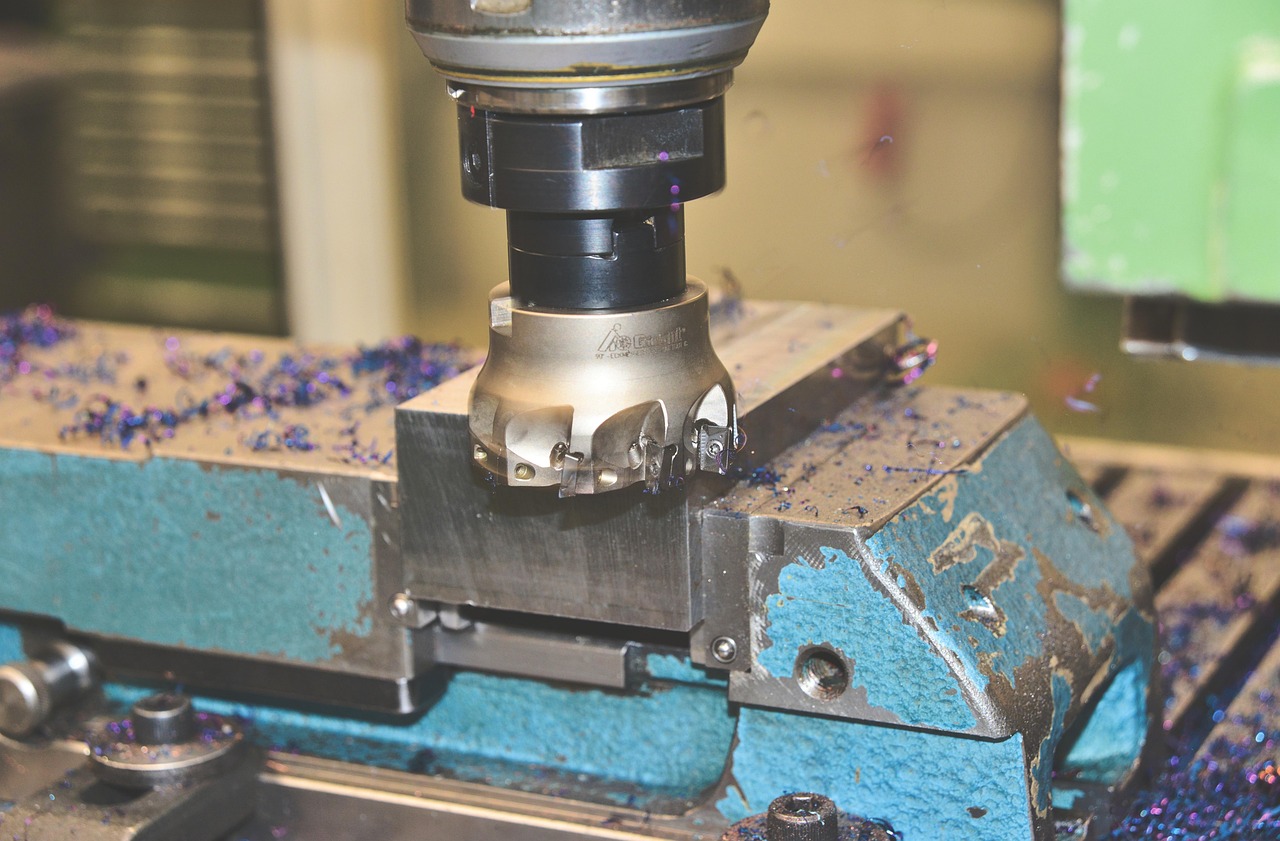
Hexagon’s Waveform Roughing technology maintains a constant engagement angle between the tool and material throughout the entire roughing cycle. Unlike traditional offset roughing that subjects tools to severe shock loads when entering tight corners, Waveform produces smooth, constant-load spiral and trochoidal movements:
- Allows full axial depth of cut (up to 2x or 3x cutter diameter) paired with small radial stepovers.
- Reduces roughing cycle times by 40% to 60% while drastically extending carbide tool life.
- Spreads cutting heat evenly across the entire flute length rather than concentrating wear at the tool tip.
Adaptive Surface Finishing Strategies
Achieving superior surface finishes on plastic mold cavities requires toolpaths that adapt seamlessly to varying surface inclinations:
- Z-Level Steep Finishing: Maintains precise stepdown control on vertical and steep cavity walls, preventing cutter deflection and stepping marks.
- Constant Scallop Finishing: Calculates true 3D stepovers across flat, curved, and complex freeform areas to produce a perfectly uniform surface roughness (Ra) across the entire component.
- Pencil Milling & Corner Clean-up: Automatically detects un-machined material remaining in tight internal radii, directing smaller ball-nose mills to clean up corners without taking unnecessary dry cuts across already finished areas.
Automated EDM Electrode Design and Milling
When plastic mold designs feature ultra-sharp internal corners, small ribbing, or deep narrow slots, mechanical milling becomes impractical. Hexagon offers automated electrode workflows:
- Automated extraction of target burn geometry directly from the solid mold core or cavity.
- Automatic application of undersize offsets for roughing, semi-finishing, and finishing spark gaps.
- Automated generation of dedicated electrode milling toolpaths along with CMM measurement inspection routines and EDM machine setup sheets.
5. WORKNC vs. VISI Machining Comparison for the Plastic Mold Industry
Choosing between WORKNC and VISI Machining depends on a toolroom’s operational model, existing software stack, and overall workflow structure. The table below outlines key technical characteristics:
| Comparison Criteria | WORKNC | VISI Machining |
|---|---|---|
| Primary Application Target | Dedicated CAM programming for medium-to-large mold bases, high-precision core/cavity inserts, and hard material 5-axis milling. | Integrated CAD/CAM/CAE environment covering full mold assembly design, plastic flow analysis, milling, and Wire EDM. |
| CAD Integration Architecture | Standalone CAM system with robust native translators for major CAD formats; paired seamlessly with Hexagon DESIGNER. | 100% natively integrated with VISI Modelling, VISI Mold, and VISI Analysis within a single unified graphic interface. |
| 5-Axis Machining Capabilities | Industry-leading Auto 5-Axis toolpath generation with dynamic collision checking and automated angle tilting. | Comprehensive 3+2 positional indexing and continuous 5-axis surface machining tailored for mold geometries. |
| Electrode Machining Workflow | Supported via CAD input (DESIGNER) and automated CAM machining macros. | Fully integrated VISI Electrode module handling extraction, holder assembly, machining, and CMM output. |
| Wire EDM Support | Focuses primarily on 2D to 5-axis milling and hole-making routines. | Includes VISI PEPS-Wire for dedicated 2-axis and 4-axis Wire EDM programming. |
| Learning Curve & Deployment | Extremely rapid shop-floor adoption due to standardized, macro-driven programming sequences. | Highly versatile end-to-end tooling system best suited for engineering teams handling both mold design and manufacturing. |
6. 5-Step Process for Efficient Plastic Mold Machining with Hexagon Software
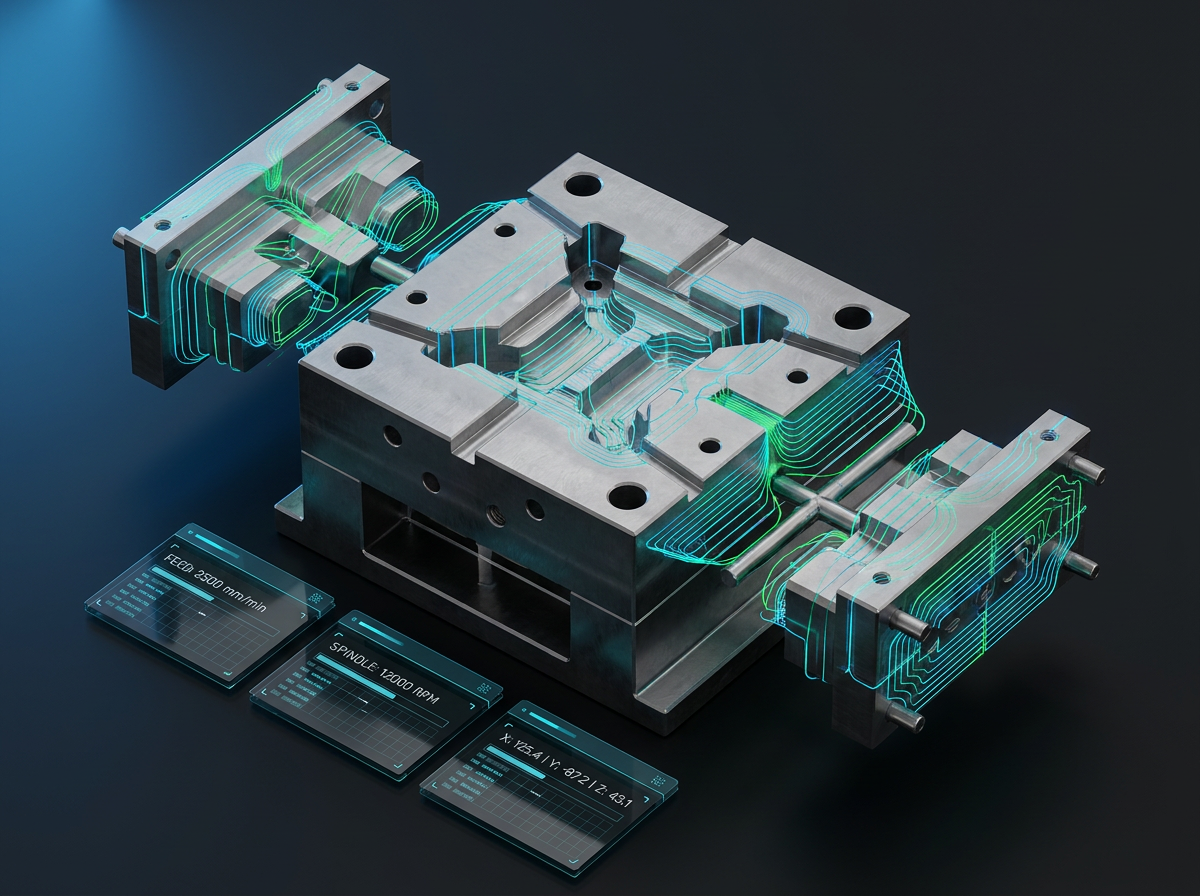
To maximize shop-floor throughput, prevent cutter failure, and achieve optimal surface quality on plastic injection molds, programming departments should adopt this standardized 5-step workflow:
- Step 1: CAD Clean-up and Parting Surface Preparation (Hexagon DESIGNER):
Import customer 3D models into DESIGNER. Inspect draft angles, patch missing faces, cap small internal holes, and separate core and cavity geometry into clean manufacturing solids. - Step 2: High-Speed Waveform Roughing:
Import clean solids into WORKNC or VISI Machining. Apply Waveform roughing toolpaths to strip away bulk material rapidly at deep axial cuts while protecting tool flutes from shock loads. - Step 3: Dynamic Stock-Aware Semi-Finishing & Electrode Extraction:
Utilize dynamic stock model updating to target remaining stock stepovers accurately. Simultaneously, extract unmillable rib and corner geometries into copper or graphite electrodes using dedicated electrode modules. - Step 4: High-Precision 5-Axis Surface Finishing (Auto 5-Axis):
Apply Z-Level and Constant Scallop finishing toolpaths. Convert 3-axis paths to Auto 5-axis continuous motion where necessary to utilize shorter cutter assemblies, minimize deflection, and achieve superior Ra surface finishes. - Step 5: Independent G-Code Verification & Collision Simulation (NCSIMUL):
Post-process toolpaths into controller-specific ISO G-code. Run the code through NCSIMUL digital twin models to verify syntax, check dynamic machine clearance, and optimize feedrates prior to spindle startup.
7. ROI and Business Benefits of Investing in Genuine Hexagon CAM Software
Upgrading to Hexagon’s advanced software suite provides immediate financial and operational gains for precision tooling companies:
- 30% to 50% Programming & Cycle Time Savings: Standardized macros combined with Waveform roughing dramatically shorten engineering design and CNC machining hours.
- Up to 70% Reduction in Manual Polishing: High-precision 5-axis finishing produces smooth surface topography, minimizing labor-intensive bench polishing and preserving true CAD geometry.
- Protection for High-Value CNC Equipment: Comprehensive G-code simulation via NCSIMUL eliminates machine crashes, spindle repairs, tool breakage, and scrapped mold blocks.
- Compliance & OEM Client Trust: Utilizing genuine, fully supported software licenses ensures compliance during customer supplier audits, positioning moldmakers to win high-tier automotive and electronics manufacturing contracts.
Solid & Soft is an authorized Hexagon reseller in Vietnam. We deliver official licenses for WORKNC, VISI, DESIGNER, and NCSIMUL, backed by professional technology transfer, tailored post-processor development, and dedicated on-site technical support.